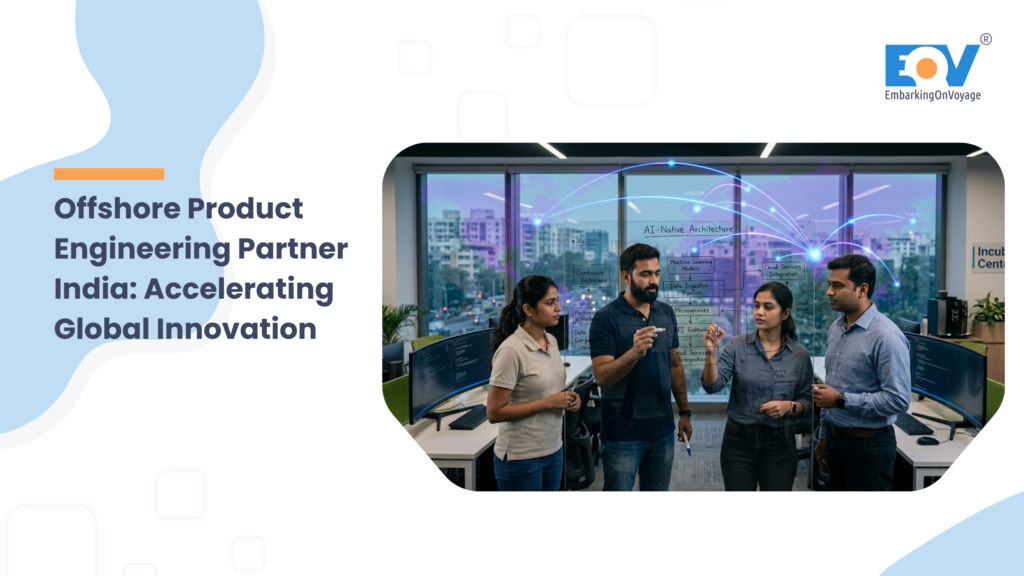
The global technology landscape is fiercely competitive, demanding that enterprises innovate faster, scale more efficiently, and continuously deliver exceptional user experiences. In this environment, finding the right offshore product engineering partner in India has shifted from a simple cost-saving measure to a critical strategic advantage.
India currently holds a commanding 30% share of the global Engineering Research and Development (ER&D) outsourcing market—a figure expected to reach 50% within a decade, according to NASSCOM. As software-driven systems dominate the global business landscape, scaling digital products requires a partner capable of executing highly complex engineering workflows, rather than just taking orders.
By leveraging an offshore product engineering partner in India, organizations gain immediate access to a deep-tech talent pool equipped to handle everything from Agentic AI to complex B2B API integrations, ensuring scalable, IP-led innovation that resonates on a global scale.
The Shift: From Traditional Outsourcing to Co-Innovation
Historically, outsourcing was synonymous with back-office IT support and basic application maintenance. Today, the Indian technology ecosystem has evolved far beyond those roots. Global enterprises now rely on Indian engineering hubs for end-to-end product development and core R&D. The focus is no longer on simply delivering lines of code, but on creating robust AI-native software architectures and driving long-term product strategy.
When you engage with an offshore product engineering partner in India, you are tapping into a mature ecosystem that prioritizes:
- Workflow-Centric UI/UX Design: Designing intuitive user onboarding workflows that drastically reduce friction, accelerate platform adoption, and drive user retention.
- Emerging AI Technologies: Integrating cutting-edge solutions like Retrieval-Augmented Generation (RAG) and Agentic AI into enterprise SaaS platforms to automate complex decision-making processes.
- Global Scalability: Building foundational software intended for global markets from day one, without being constrained by narrow regional limitations or localized technical debt.
Industry projections indicate that India’s product engineering services market is expanding at a Compound Annual Growth Rate (CAGR) of 9.6%, significantly outpacing the global average. This rapid growth reflects a fundamental industry shift toward high-value, outcome-driven innovation over traditional arbitrage.
Key Capabilities to Look For in a Partner
Identifying a high-performing offshore product engineering partner in India requires evaluating their technical depth, agile maturity, and product mindset. The ideal partner must act as a seamless extension of your own engineering team. When vetting potential agencies, evaluate them against these critical capabilities:
1. Expertise in AI-Native Software Architecture
Modern enterprise software must be built from the ground up to support AI capabilities, not just patched with AI features as an afterthought. Look for a partner with proven experience in deploying Agentic AI models and structuring robust data pipelines for RAG applications. These structural elements are non-negotiable for future-proofing modern B2B SaaS applications and maintaining a competitive edge.
2. Comprehensive API & Integration Ecosystems
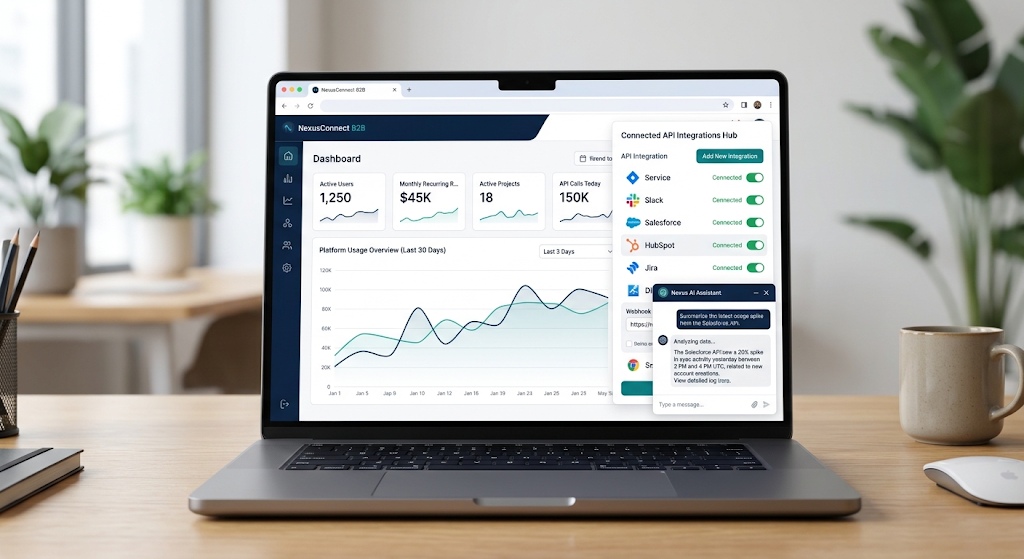
No product exists in a vacuum. Whether it involves complex B2B travel supplier API integrations, global fintech payment gateways, or enterprise CRM connections, your software needs rigorous security and low-latency data handling. A strong partner will have a documented history of mapping out complex API architectures, standardizing data flows, and deliberately mitigating technical debt during the integration phase.
3. Agile MVP Scoping and Product Strategy
Development speed is critical, but building the right features is paramount. Your partner should contribute actively to user story mapping, product specification documents, and backlog management in tools like Jira. The ability to define a clear, lean Minimum Viable Product (MVP) feature scope ensures a faster time-to-market, validates core assumptions early, and actively prevents resource-draining feature creep.
4. Stringent Data Security and Global Compliance
When collaborating globally, data integrity is paramount. Your chosen partner must operate under strict security frameworks, ensuring compliance with global standards (like GDPR or SOC2) and implementing secure coding practices across the entire Software Development Life Cycle (SDLC).
Accelerating Growth with the CoVoyNetwork
Scaling a digital product requires more than just excellent code; it requires strategic alliances and market leverage. Forward-thinking engineering firms actively foster ecosystems that connect enterprises, startups, and technology experts to multiply value.
Through collaborative initiatives like the CoVoyNetwork, global partners can leverage a formalized referral and collaboration program designed to amplify business reach and foster deep-tech synergy. This interconnected approach ensures that your offshore product engineering partner in India is not just a vendor building software, but a strategic ally actively contributing to your broader market expansion and technological resilience.
Propel Your Digital Product Forward
Choosing to scale your development with an offshore product engineering partner in India is a decisive move toward operational excellence and sustained product innovation. By prioritizing partners who specialize in advanced software architecture, scalable API ecosystems, and workflow-centric design, you position your product to compete—and win—on the global stage.
Ready to architect your next digital solution? Connect with our engineering experts today to discuss your product roadmap, API integration needs, and how to embed AI seamlessly into your software strategy.
PakarPBN
A Private Blog Network (PBN) is a collection of websites that are controlled by a single individual or organization and used primarily to build backlinks to a “money site” in order to influence its ranking in search engines such as Google. The core idea behind a PBN is based on the importance of backlinks in Google’s ranking algorithm. Since Google views backlinks as signals of authority and trust, some website owners attempt to artificially create these signals through a controlled network of sites.
In a typical PBN setup, the owner acquires expired or aged domains that already have existing authority, backlinks, and history. These domains are rebuilt with new content and hosted separately, often using different IP addresses, hosting providers, themes, and ownership details to make them appear unrelated. Within the content published on these sites, links are strategically placed that point to the main website the owner wants to rank higher. By doing this, the owner attempts to pass link equity (also known as “link juice”) from the PBN sites to the target website.
The purpose of a PBN is to give the impression that the target website is naturally earning links from multiple independent sources. If done effectively, this can temporarily improve keyword rankings, increase organic visibility, and drive more traffic from search results.