
Every agency owner knows the feeling. A promising client brief lands in your inbox, and your first thought is excitement. Your second is worry: Do we have the people to build this?
Clients now expect sophisticated products, faster delivery and specialist skills, while budgets and margins stay tight. Hiring a full engineering team for every opportunity rarely makes sense. That is why offshore software development for digital agencies has become a practical way to grow capacity without taking on unnecessary risk.
The goal isn’t to find the cheapest team. It’s to build a delivery model you can trust. This guide covers what offshore development is, what it really costs, the risks worth planning for, and how to choose the right partner.
What Is Offshore Software Development?
Offshore software development means working with an engineering team in another country, often in a different time zone, to build or maintain software.
For agencies in the US, UK and Europe, an offshore partner can provide:
- Custom software and application development
- Web and mobile engineering
- Backend services, APIs and integrations
- Cloud engineering and platform modernisation
- AI implementation and integration
- Quality assurance, testing and release support
- Ongoing product development
You might work with individual specialists, a dedicated team, or a partner that owns a defined delivery stream. Our web application development services, for example, can cover a whole product or just the pieces you need.
Why Digital Agencies Consider Offshore Development
1. Access specialised engineering skills
A client project might need cloud architecture, complex integrations, mobile engineering or production-grade AI. Hiring each specialist permanently for a single project is hard to justify. An offshore partner gives you that expertise when you need it. The real question is whether they have relevant experience and can fit into your delivery process.
2. Respond to demand without overcommitting
Agency work arrives in waves. Three projects land at once, then things go quiet. An offshore model gives you extra capacity at the busy times without a permanent headcount increase.
Check the contract, though. Minimum commitments, onboarding time, team continuity and exit terms all decide how flexible an engagement really is.
3. Improve delivery economics
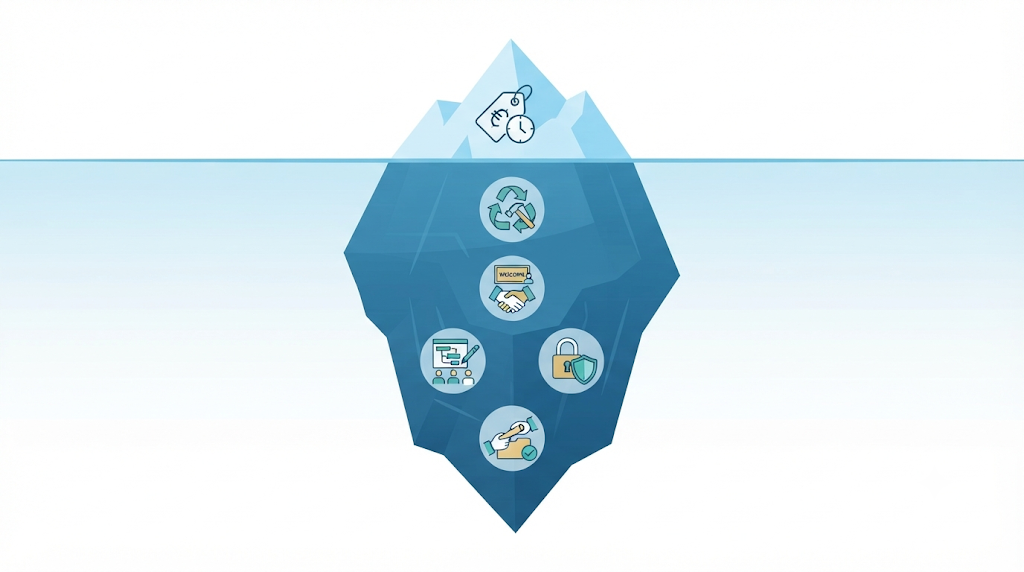
Offshore engineering can reduce some labour costs, depending on the country, skills and structure. But the hourly rate is only part of the story. A low rate can be wiped out by unclear requirements, rework, slow communication and extra management time. A higher rate can be the better deal if the team ships reliably.
When you assess offshore development costs, look at the total cost of delivery:
- Engineering and technical leadership
- Onboarding and knowledge transfer
- Project management and coordination
- Testing, rework and defect fixing
- Infrastructure and third-party services
- Security, compliance and contractual overhead
- Transition and handover
Always compare partners using the same project assumptions, never rate cards alone. For a broader view of how providers are rated, Clutch’s directory of software developers is a useful place to start.
Common Offshore Software Development Models
These models are not interchangeable, so pick the one that fits what you want to control and what you want your partner to own.
Project-based development. The partner delivers a defined scope for an agreed price or milestones. It works best when requirements and acceptance criteria are clear.
Dedicated development team. A team works on an ongoing stream of work. It suits agencies with a steady pipeline that want continuity while keeping control of priorities.
Staff augmentation. Individual developers join your team and work under your direction. This works well if you already have strong technical leadership and project management.
Product co-development. You and the partner plan, design the architecture and build together. The partner may own defined outcomes, not just supply people. This is the model EOV Digital’s product engineering team uses with its AI-native engineering pods.
5 Offshore Development Risks to Address Before You Sign
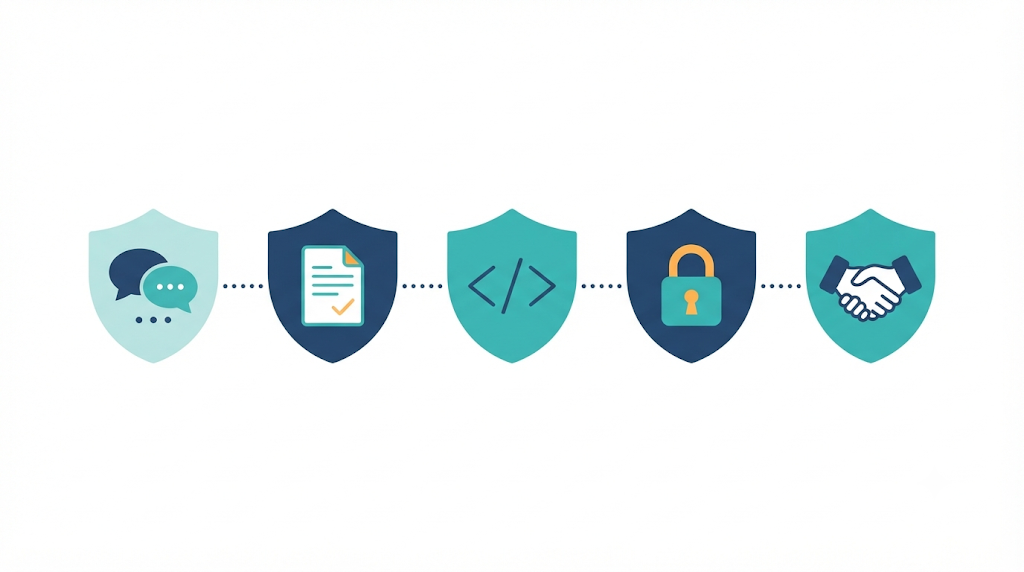
Offshore work doesn’t fail because of geography. It fails when nobody planned for the predictable problems. Here are five to tackle early.
Risk 1: Communication gaps
Time zones can slow decisions if the working model isn’t designed carefully. Agree on overlapping hours, response times, meeting rhythms, written status updates and escalation paths. Write decisions down so context doesn’t get stuck in chat threads.
Risk 2: Unclear scope and estimates
Vague requirements at the start become disputes at the end. Define assumptions, dependencies, deliverables and acceptance criteria before work begins. Set up a change-control process, and make sure everyone knows the difference between a real scope change and a defect in agreed functionality. Agile frameworks such as Scrum offer a shared vocabulary for this.
Risk 3: Inconsistent code quality
A team that ships features fast but skips testing and documentation leaves you with expensive technical debt. Ask about code reviews, automated testing, security checks and release processes. Where you can, review a code sample or run a small technical assessment.
Risk 4: Security and intellectual property exposure
Offshore delivery doesn’t automatically create a security problem, but it does need clear controls. Use confidentiality agreements, least-privilege access and secure development practices. Align with trusted references like the OWASP Top Ten and the NIST Cybersecurity Framework. Document who owns source code and project-specific IP.
If your client has regulatory restrictions, such as GDPR, confirm that the partner’s location, access model and data handling are acceptable before you share anything.
Risk 5: Losing control of the client relationship
Your client trusts you, even when someone else writes the code. Decide who speaks to the client, who approves technical decisions and how risks are escalated. Make sure you have enough visibility to manage expectations before small issues become crises.
How to Choose an Offshore Software Development Partner
Before deciding, ask each candidate to explain how they’d approach a real project similar to yours. Their answer tells you more than any sales deck.
Then look for evidence in six areas:
- Relevant experience: Have they delivered comparable products or solved similar technical challenges?
- Delivery governance: Can they plan milestones, manage dependencies and report progress openly?
- Technical leadership: Do they contribute to architecture decisions, or just execute tasks?
- Security and IP: Are ownership, confidentiality and access controls covered in contracts and in daily practice?
- Commercial fit: Do their pricing model and change-control process match your client engagement?
- Continuity: Can they retain knowledge, handle team changes and provide a practical handover?
Ask for references, and consider starting with a small, bounded engagement. It’s a low-risk way to test communication, quality and chemistry before you scale up. If you’d like to talk through what that could look like, get in touch with our team.

Is Offshore Software Development Right for Your Agency?
It’s a strong fit when you have a credible pipeline of technical work but don’t want to build every capability in-house.
It’s a poor fit as a quick fix for broken requirements, weak project governance or unrealistic client promises. Outsourcing the build doesn’t remove the need for clear product decisions and good delivery management.
For many agencies, a hybrid approach works best. Keep client relationships, strategy and key decisions close to home, and use an offshore partner to extend your engineering capability.
From Offshore Resources to a Delivery Partnership
The best offshore relationships are about more than access to developers. They combine technical skill, communication, delivery discipline and clear accountability.
EOV Digital works as a product co-development partner, using AI-native engineering pods to extend your delivery capacity from roadmap planning through to production. Engagements can be structured around agreed deliverables and outcome-oriented commercials. For agencies, that means pursuing the right opportunities, delivering with more confidence and staying in control of the client relationship.
Ready to explore offshore software development for your agency? Review your project requirements, compare the full cost of delivery and choose a partner whose capability and operating model fit how you work. Talk to EOV Digital about your next project.
Frequently Asked Questions
What is offshore software development for digital agencies?
It means partnering with an engineering team in another country to build or maintain software for your agency’s clients. It adds capacity and specialist skills without permanent hiring.
Is offshore development cheaper than hiring in-house?
It can reduce some labour costs, but the cheapest hourly rate isn’t always the lowest total cost. Rework, management time and delays all count, so compare the full cost of delivery.
Which offshore model is best for an agency?
It depends on your internal capability. Staff augmentation suits agencies with strong technical leads, while dedicated teams and product co-development suit agencies that want a partner to own more of the delivery.
How do I protect client data and IP when working offshore?
Use confidentiality agreements, least-privilege access, secure development practices and clear contractual ownership of code and deliverables. Confirm regulatory requirements before sharing client data.
How should I start with a new offshore partner?
Begin with a small, bounded engagement to test communication, quality and collaboration before scaling.
PakarPBN
A Private Blog Network (PBN) is a collection of websites that are controlled by a single individual or organization and used primarily to build backlinks to a “money site” in order to influence its ranking in search engines such as Google. The core idea behind a PBN is based on the importance of backlinks in Google’s ranking algorithm. Since Google views backlinks as signals of authority and trust, some website owners attempt to artificially create these signals through a controlled network of sites.
In a typical PBN setup, the owner acquires expired or aged domains that already have existing authority, backlinks, and history. These domains are rebuilt with new content and hosted separately, often using different IP addresses, hosting providers, themes, and ownership details to make them appear unrelated. Within the content published on these sites, links are strategically placed that point to the main website the owner wants to rank higher. By doing this, the owner attempts to pass link equity (also known as “link juice”) from the PBN sites to the target website.
The purpose of a PBN is to give the impression that the target website is naturally earning links from multiple independent sources. If done effectively, this can temporarily improve keyword rankings, increase organic visibility, and drive more traffic from search results.